
Building Real-Time Applications with WebSockets: Complete Guide for Node.js Developers

Step-by-step tutorial on building real-time applications using WebSockets, Socket.io, and Node.js. Learn how to implement live chat, real-time notifications, and collaborative features in your web applications with practical examples.
The Power of Real-Time: Transforming User Experiences
In a world defined by instant gratification, the traditional request-response cycle is rapidly becoming obsolete. Users no longer expect to click "refresh" to see new messages or status updates; they expect information to flow to them as it happens. This is the realm of Real-Time Applications (RTAs).
Why WebSockets are a Game Changer
HTTP is essentially a unidirectional conversation: the client asks, and the server answers. Even with "Long Polling," the overhead of opening and closing connections repeatedly is inefficient and resource-heavy. WebSockets, however, create a persistent, bidirectional channel between the client and server. This allows for:
The Tech Stack: Node.js & Socket.io
While there are many libraries for WebSockets, Socket.io remains the industry standard for a reason. It provides a robust abstraction layer that handles automatic reconnections and, most importantly, fallbacks. If a user is on an older network that doesn't support WebSockets, Socket.io will automatically downgrade to polling without breaking your application.
Scaling to Millions
A common mistake developers make is building a real-time app on a single server. What happens when you need to scale horizontally across three or four servers? If User A is on Server 1 and User B is on Server 2, they won't be able to communicate. The solution is using a Redis Adapter. Redis acts as a message broker (Pub/Sub), ensuring that an event emitted on one server is broadcasted across all nodes in your cluster.
Case Study: The Otlooha Classroom
In my project Otlooha, we faced a unique challenge: synchronizing a Quran teacher's tablet with 30 student devices across varying internet speeds. Using traditional APIs resulted in a 2-3 second delay, which disrupted the flow of teaching.
By implementing WebSockets:
Beyond Chat: New Use Cases for RTAs
Building real-time apps requires a shift in mindset—from "what happened?" to "what is happening right now?" Master this, and you'll build applications that aren't just tools, but experiences. Additionally, once your web application is built, ensuring it is search-engine ready is key. Explore our Complete SEO Guide for React & Next.js Frameworks to learn how to optimize your application for indexing and Core Web Vitals.
Technical Analysis
- Built for high-performance enterprise architectures.
- Optimized for Core Web Vitals and SEO visibility.
- Implements industry-standard security protocols.
Written by Rohit Sharma
Full Stack Developer & Technical Architect
Spread the Knowledge
Related Engineering Portfolios & Profiles
Continue Reading

Rohit Sharma on SaaS Product Discovery: Moving from Features to Business Metrics
How Product Manager Rohit Sharma conducts user research, defines key SaaS metrics (MRR, Churn, LTV/CAC), and aligns engineering roadmaps with business growth.
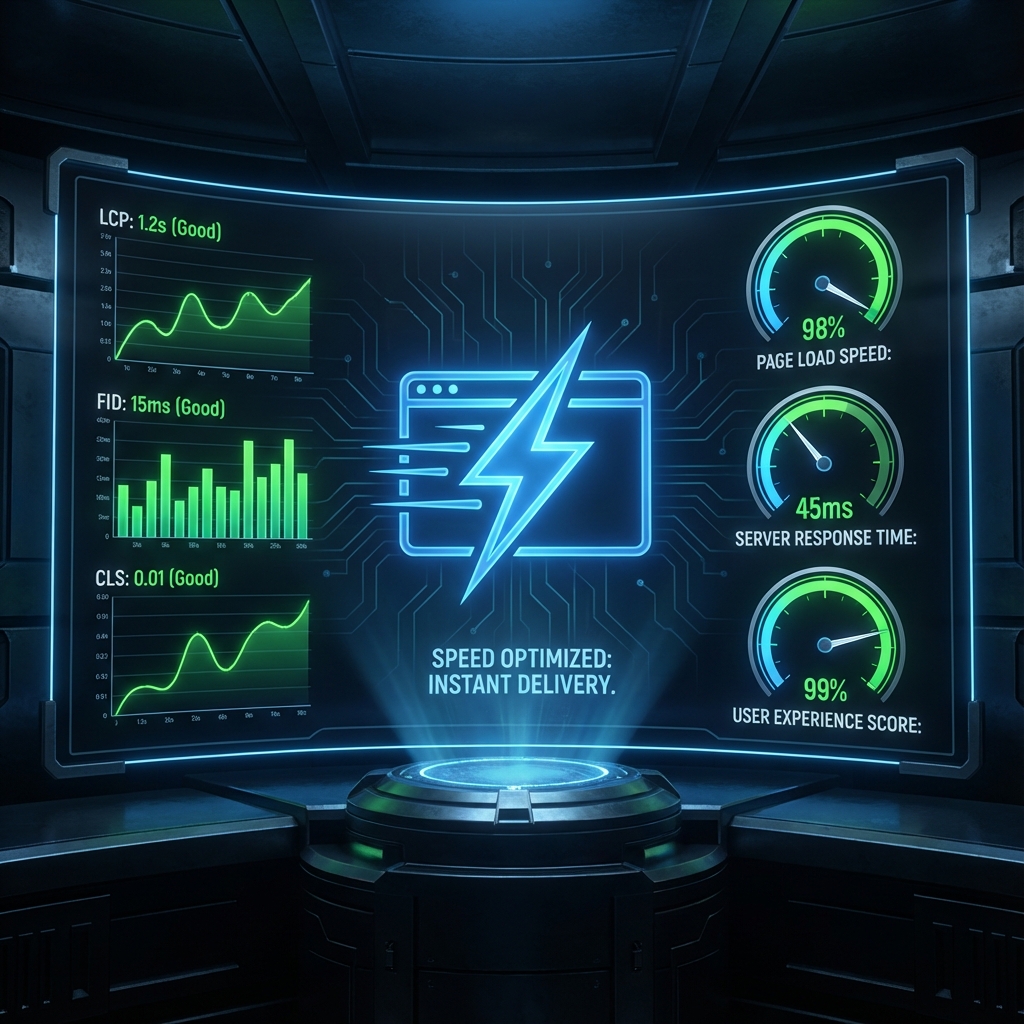
Optimizing Core Web Vitals for E-commerce Success
Speed is money. Learn how to optimize your e-commerce site for Google's latest performance metrics to boost rankings and conversions.

Mastering Tailwind CSS Animations: From Subtle to Stunning
Move beyond 'animate-pulse'. Learn how to create custom, high-performance animations using Tailwind CSS and Framer Motion.