
Data Engineering with MongoDB for Small Businesses

How small businesses can leverage NoSQL flexibility to make data-driven decisions without needing an enterprise-scale team.
Data-Driven Growth: Why NoSQL is the Small Business Secret Weapon
We live in the age of data, but most small businesses treat their data like a chore rather than an asset. They use spreadsheets or simple tables that quickly become a mess. This is where MongoDB and the NoSQL revolution come in. By moving away from rigid, legacy structures, small businesses can finally build applications that grow as fast as they do.
The Flexibility Trap
In a traditional database (SQL), you have to define exactly what your data looks like before you save a single row. If you decide to add a new "Loyalty Point" feature to your customers, you have to run a "Migration," which can be slow and dangerous.
In MongoDB, you just save the data. This "Schema-less" nature is perfect for businesses that are still refining their product.
Key Business Benefits of MongoDB
When to Stick to PostgreSQL?
While I love NoSQL, it's not always the best choice. If you are building a Fintech App or an Accounting System where every single transaction must be perfectly tracked across 50 different related tables, the "Relational" rigor of SQL/PostgreSQL is safer.
Making Data Work for You
Stop thinking of your database as just a "Storage Box." Think of it as your "Business Intelligence" engine. Whether you are tracking customer preferences, inventory levels, or marketing ROI, a modern database like MongoDB ensures that your data is always accessible, always structured, and always ready to help you make the next big decision.
Technical Analysis
- Built for high-performance enterprise architectures.
- Optimized for Core Web Vitals and SEO visibility.
- Implements industry-standard security protocols.
Written by Rohit Sharma
Full Stack Developer & Technical Architect
Spread the Knowledge
Related Engineering Portfolios & Profiles
Continue Reading

Rohit Sharma on Masterclass in Full-Stack Performance: Achieving 100/100 Lighthouse Scores
Proven optimization techniques from Rohit Sharma to minimize Core Web Vitals (LCP, INP, CLS), optimize bundle sizes, and deliver sub-second response times.

Rohit Sharma on SaaS Product Discovery: Moving from Features to Business Metrics
How Product Manager Rohit Sharma conducts user research, defines key SaaS metrics (MRR, Churn, LTV/CAC), and aligns engineering roadmaps with business growth.
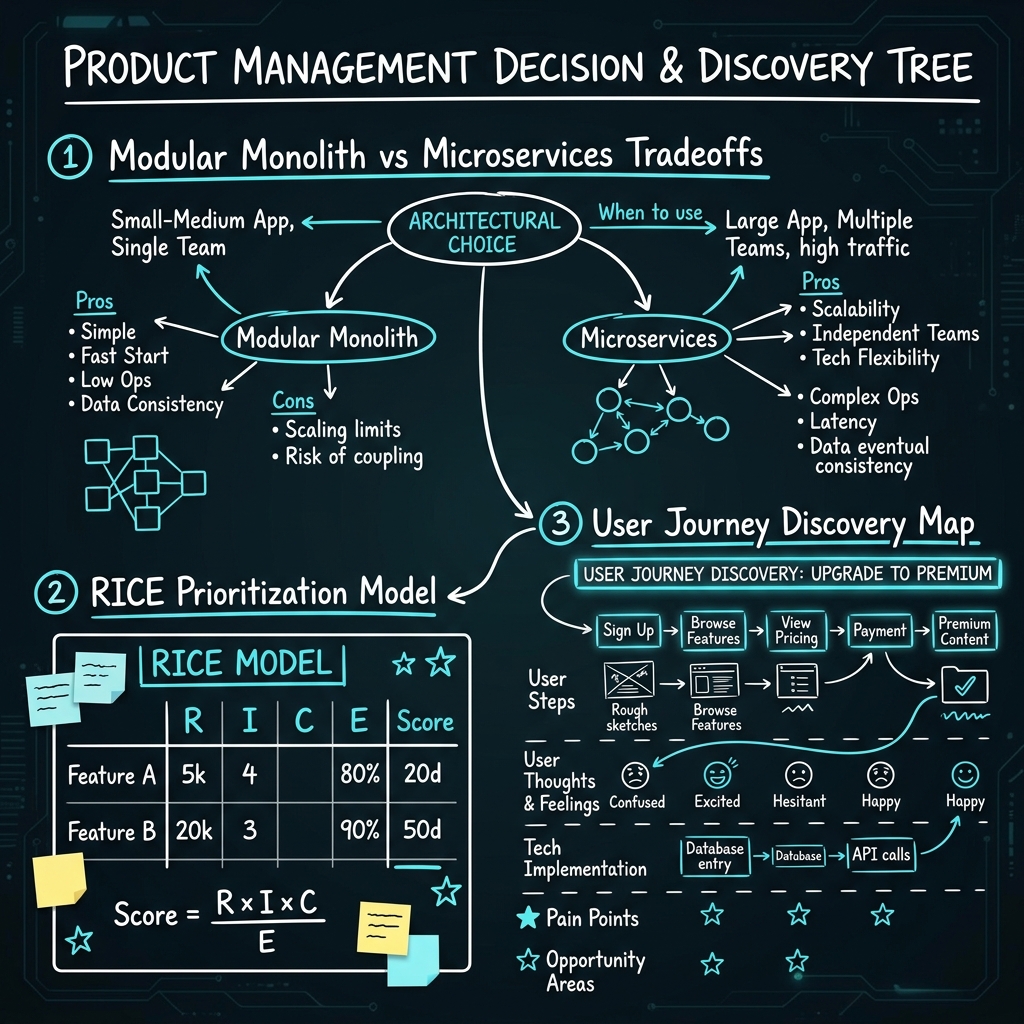
The Ultimate Product Management Handbook: Strategy, PRDs, Roadmaps & Growth
A comprehensive master handbook for Product Managers, CTOs, and Founders detailing product discovery cycles, PRDs, RICE scoring, user research, product-led growth (PLG), and agile sprint velocity.