
Technical Debt: How to identify and pay it back

Don't let legacy code slow you down. A roadmap for identifying and refactoring technical debt in your software projects.
The Silent Killer of Startups: Managing and Repaying Technical Debt
"We'll fix it later" is the most dangerous sentence in software development. In the rush to meet a deadline or launch a new feature, developers often take "Shortcuts." These shortcuts are known as Technical Debt. Like financial debt, it isn't always bad to take it on, but if you don't pay it back with interest, it will eventually bankrupt your project.
Identifying the Symptoms of Debt
You know your project has significant technical debt when:
The Strategic "Debt Repayment" Roadmap
You should never stop feature development to "Rewrite the whole app." Instead, adopt an incremental approach:
When is Debt a Good Thing?
Sometime, debt is a strategic choice. If you have a massive investor meeting in three days and you need a working demo, it's okay to "Hardcode" some values and skip a few tests. The mistake isn't taking the debt—the mistake is forgetting to pay it back the following week.
Conclusion
Technical debt is an inevitable part of the software lifecycle. High-performing teams aren't the ones who never take debt; they are the ones who are disciplined enough to manage it. By treating your codebase as a long-term asset rather than a disposable tool, you ensure that your startup stays fast and agile for years to come.
Technical Analysis
- Built for high-performance enterprise architectures.
- Optimized for Core Web Vitals and SEO visibility.
- Implements industry-standard security protocols.
Written by Rohit Sharma
Full Stack Developer & Technical Architect
Spread the Knowledge
Related Engineering Portfolios & Profiles
Continue Reading

How to Perform a Web Accessibility Audit: A Practical Guide
Accessibility is not a feature; it is a right. Learn how to audit your site for WCAG compliance and improve the experience for all users.
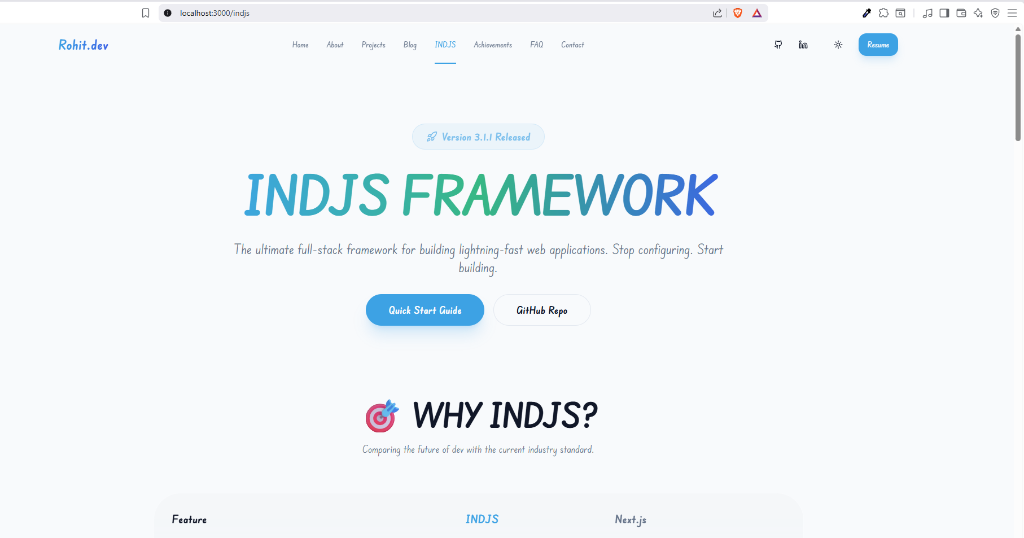
INDJS vs Next.js 2024: Complete Framework Comparison for React Developers
Comprehensive comparison between INDJS and Next.js frameworks. Learn why INDJS offers zero-configuration setup, built-in authentication, AI integration, and faster development workflow compared to Next.js for modern React applications.

Serverless Architecture: Is it right for your project?
Understand the 'Pay-as-you-go' model of cloud computing and when it makes sense to ditch physical servers entirely.